Chupacabra Goat Cheese Empanadas
Livestock Unaccounted For
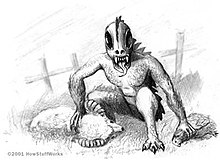
The Chupacabra, a creature steeped in mystery and folklore, has captured the imaginations of people across the Americas and beyond. Originating primarily from the realms of Latin American folklore, this enigmatic being has become a subject of fascination and speculation.
The name “Chupacabra” derives from the Spanish words “chupar” (to suck) and “cabra” (goat), referring to its alleged habit of attacking and draining the blood of livestock, particularly goats. It is said to leave behind characteristic puncture wounds on the necks of its victims. Reports of these attacks have led to the creation of a captivating legend surrounding the creature.
Descriptions of the Chupacabra vary, but common portrayals depict it as a small to medium-sized creature, resembling a hairless canid or reptilian being. It is often described as having large, glowing red eyes, sharp fangs, and spines or quills running down its back. Some accounts even suggest that it possesses leathery wings, enabling it to take flight. Its agility and speed are said to be unparalleled, allowing it to swiftly elude capture and vanish into the night.
The Chupacabra gained significant attention in the 1990s when reports of mysterious livestock killings emerged in Puerto Rico, with farmers attributing the deaths to this unknown creature. Since then, similar reports have surfaced in various parts of the Americas, including Mexico, the United States, and other countries. Though the descriptions and characteristics vary from region to region, the underlying theme of a blood-sucking predator remains consistent.
Despite the widespread accounts and urban legends, scientific evidence supporting the existence of the Chupacabra remains elusive. Many skeptics believe that the sightings can be attributed to misidentifications of known animals, such as canids or wild canines suffering from mange or other conditions. Additionally, hoaxes, exaggerated stories, and sensationalism have likely contributed to the Chupacabra’s notoriety.
Nonetheless, the Chupacabra continues to hold a prominent place in popular culture, appearing in books, films, and various media. It represents the allure of the unknown, the mysteries lurking in the darkness, and the enduring power of folklore. Whether a creature of myth or a genuine enigma yet to be discovered, the legend of the Chupacabra continues to captivate and intrigue those who dare to explore its fascinating realm.
Ingredients:
Empanada dough (store-bought or homemade)
8 oz goat cheese, softened
1/2 cup shredded mozzarella or Oaxaca cheese
1 small onion, finely diced
2 cloves garlic, minced
1 tablespoon olive oil
1 teaspoon ground cumin
1/2 teaspoon smoked paprika
Salt, to taste
Black pepper, to taste
1 egg, beaten (for egg wash)
Optional additions (use sparingly):
Fresh cilantro or parsley
Red pepper flakes
Instructions:
Preheat your oven to 400°F (205°C). Line a baking sheet with parchment paper.
Heat the olive oil in a skillet over medium heat. Add the diced onion and cook for 3–4 minutes, until softened and translucent. Add the minced garlic and cook for another 30 seconds, until fragrant. Remove from heat and let cool slightly.
In a bowl, combine the softened goat cheese, shredded mozzarella (or Oaxaca cheese), cooked onion and garlic, cumin, smoked paprika, salt, and black pepper. Mix until smooth and evenly combined.
Lay out the empanada dough rounds on a clean work surface. Spoon 1–2 tablespoons of the cheese mixture into the center of each round, being careful not to overfill.
Fold the dough over the filling to form a half-moon shape. Press the edges together and seal by crimping with a fork or folding decoratively by hand.
Brush the tops of the empanadas lightly with the beaten egg to promote even browning.
Arrange the empanadas on the prepared baking sheet, spacing them slightly apart. Bake for 18–22 minutes, or until golden brown and crisp.
Remove from the oven and let cool for a few minutes before serving.
Conclusion (Allegedly)
Best served warm. Best not discussed.